

What Causes Paint Protection Film Edges to Lift or Peel?
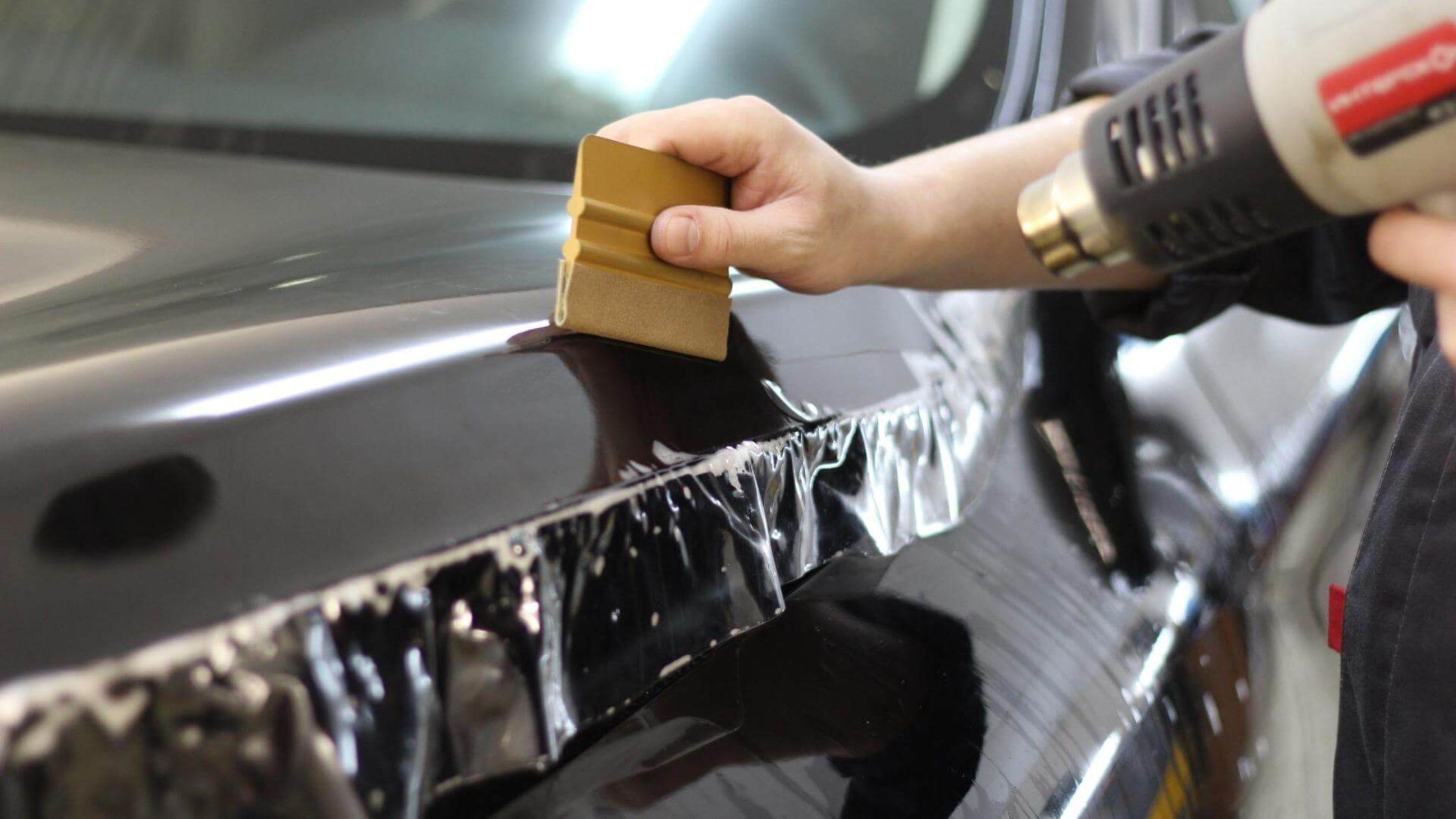
Paint protection film edges can lift when the adhesive bond near the perimeter is weakened by contamination, trapped installation solution, excessive film tension, insufficient edge preparation, mechanical stress, or damage after installation. For drivers with PPF in Springfield MO, professionally installed Paint protection film should sit securely against properly prepared paint, but the film's edges remain important areas to inspect and maintain.
A lifted edge should not automatically be blamed on one cause. The location of the lifting, when it began, how the vehicle was washed, and how the panel was prepared can all help identify why the film is separating.
What Causes PPF in Springfield MO to Lift at the Edges?
PPF in Springfield MO can lift when the film's adhesive loses consistent contact with the painted surface near an exposed edge.
Common causes include:
- Surface contamination during installation
- Wax or sealant left near edges
- Trapped moisture
- Excessive film stretch
- Insufficient edge pressure
- Difficult panel geometry
- Dirt entering beneath an exposed edge
- Aggressive pressure washing
- Physical contact
- Film damage
- Aging adhesive
The timing of the problem matters.
Film that begins lifting shortly after installation may have a different cause from film that develops edge wear after years of road exposure.
How Does Poor Surface Preparation Cause PPF Edge Lifting?
PPF adhesive needs clean paint to form a consistent bond.
If wax, sealant, polishing oil, silicone, dirt, or other contamination remains on the surface, the adhesive may attach to the residue rather than make proper contact with the paint.
Edges are particularly sensitive because they experience:
- Water movement
- Airflow
- Washing pressure
- Dirt accumulation
- Repeated contact
Even a small contaminated section can become the starting point for lifting.
Thorough preparation before installation is therefore one of the most important ways to reduce PPF edge lifting.
Can Wax or Ceramic Products Cause PPF Adhesive Problems?
Residue from certain surface products can interfere with film adhesion if it remains on the paint during installation.
Potential contaminants include:
- Wax
- Paint sealants
- Polishing oils
- Silicone residue
- Greasy detailing products
This does not mean a vehicle that has previously been waxed can never receive PPF.
It means those products need to be appropriately removed from the installation area so the adhesive can make consistent contact with the actual painted surface.
Can Trapped Installation Solution Make PPF Lift?
Yes. Excess solution near an edge can prevent immediate adhesive contact.
PPF is commonly installed using liquid solutions that help position the film before it is secured.
The installer then removes the liquid beneath the film using appropriate squeegee techniques.
If too much solution remains near an edge, that section may not establish the same bond as surrounding areas.
Possible signs include:
- A loose perimeter
- Small pockets near edges
- Film that initially looks attached but later releases
- Contamination entering beneath the lifted section
Proper edge finishing is important before the vehicle leaves the installation environment.
Why Does Excessive Stretch Cause PPF Edges to Lift?
PPF naturally wants to return toward its original shape when it has been stretched.
Some stretching is necessary to fit curved automotive panels, but excessive tension can place continuous pulling force on an edge.
This is particularly relevant around:
- Bumper corners
- Mirrors
- Deep curves
- Recesses
- Complex body lines
- Tight panel transitions
If the film stores too much tension, the adhesive has to resist that force continuously.
Eventually, the edge may begin moving away from the panel.
Can PPF Lift Around Curved Bumpers?
Yes. Bumpers contain some of the most challenging shapes on a vehicle.
Unlike a relatively flat hood, a bumper may include:
- Sharp curves
- Air inlets
- Corners
- Recesses
- Sensors
- Grilles
- Multiple changes in direction
The film has to conform to all of these shapes while maintaining adhesive contact.
Pattern accuracy, stretch control, surface preparation, and edge finishing all become especially important on complex bumper sections.
Why Do PPF Edges Sometimes Lift Shortly After Installation?
Early edge lifting may indicate that the film did not establish a stable bond in that particular area.
Potential reasons include:
- Remaining moisture
- Contamination
- Excessive tension
- An edge that was not fully secured
- Difficult panel geometry
- Early exposure to mechanical stress
Minor installation moisture beneath the main film area can sometimes change as the film settles, but an edge physically separating from the paint should be evaluated rather than repeatedly pressed down by the vehicle owner.
Can Washing a Car Too Soon Cause PPF to Lift?
Early washing can place unnecessary stress on film edges before the installation has fully settled.
Follow the installer's aftercare instructions regarding when the vehicle can be washed.
High-pressure water is particularly relevant because it can force water against a film edge.
Owners should avoid placing a pressure-washer nozzle directly against the edge of the PPF.
The closer and more aggressive the spray, the greater the mechanical force placed on the film.
Can Pressure Washing Cause Paint Protection Film Peeling?
Improper pressure washing can contribute to paint protection film peeling, especially when water is directed closely underneath an exposed film edge.
Pressure washing does not automatically damage properly installed PPF.
Technique matters.
Safer practices include:
- Keep reasonable distance from film edges
- Avoid directing concentrated spray underneath an edge
- Do not use the pressure washer to remove a lifted section
- Follow film care recommendations
- Have existing lifting corrected before aggressive washing
Once water and contamination repeatedly enter underneath a loose edge, the affected area can become more difficult to resecure.
Can Automatic Car Washes Make PPF Edges Lift?
Some automatic wash equipment can place physical stress on exposed film edges.
The level of risk depends on:
- Type of wash
- Brush contact
- Existing film condition
- Placement of film edges
- Age of installation
A properly installed film should be durable enough for normal vehicle use, but repeated contact against a vulnerable or already lifted edge can worsen the problem.
A film edge that has begun separating should be evaluated rather than subjected to additional mechanical stress.
Can Dirt Under a PPF Edge Make Peeling Worse?
Yes. Once an edge lifts, dust and dirt can begin collecting underneath it.
This contamination reduces the likelihood that simply pressing the film back down will create a clean, durable bond.
The longer the edge remains exposed, the more it may collect:
- Road dust
- Wax
- Soap
- Water minerals
- Pollen
- Grease
- Other environmental contamination
This is why early inspection is preferable to ignoring a small lifting section until it becomes a larger problem.
Should You Cut Off a Lifted PPF Edge Yourself?
Generally, it is better to have the area inspected before cutting the film.
Trimming without understanding the installation pattern could:
- Create an uneven edge
- Expose additional paint
- Cut too close to the vehicle surface
- Affect appearance
- Make later repair more difficult
A technician can determine whether the appropriate solution is:
- Cleaning and resecuring
- Professional trimming
- Replacing a section
- Replacing the panel's film
The solution depends on how much film has lifted and how contaminated the adhesive has become.
Can You Glue a Lifted PPF Edge Back Down?
Household glue should not be used to repair PPF.
Paint protection film uses a specifically engineered adhesive layer.
Introducing unrelated adhesives can create problems such as:
- Paint contamination
- Visible residue
- Uneven appearance
- Difficult future removal
- Damage to the film
If the original PPF adhesive no longer bonds because it is contaminated or damaged, the area should be evaluated professionally.
Do Exposed PPF Edges Lift More Easily Than Wrapped Edges?
Exposed edges can receive more direct contact from water, dirt, airflow, and washing.
Wrapped edges place the film boundary around a panel edge where possible, which can make the transition less visible and less directly exposed.
However, not every automotive panel can or should have every edge wrapped.
Pattern design depends on:
- Vehicle construction
- Panel access
- Available clearance
- Film pattern
- Coverage package
- Installer approach
A professionally finished exposed edge can still perform well when properly installed and maintained.
Can Rock Chips Cause PPF to Peel?
A strong impact near the film edge can damage the material or disturb adhesion.
PPF is designed to act as a sacrificial protective layer, which means the film itself may take damage that would otherwise affect the paint.
A significant road impact can cause:
- Tears
- Punctures
- Distortion
- Edge damage
- Localized lifting
Film with physical damage should be inspected to determine whether it can remain in place or needs replacement.
Can Temperature Changes Cause PPF Edge Problems?
Temperature influences both the film and adhesive, but normal automotive PPF is designed for outdoor vehicle use.
Problems are more likely when temperature interacts with another issue such as:
- Excessive installation tension
- Weak initial adhesion
- Contamination
- Poor edge finishing
- Physical damage
Repeated heating and cooling can place additional stress on a marginal installation area.
A correctly installed edge should account for normal vehicle exposure.
Does Old PPF Eventually Start Peeling?
Film can show signs of aging after years of exposure, although proper PPF should not simply be expected to peel prematurely.
Long-term condition depends on:
- Film quality
- Installation
- UV exposure
- Vehicle storage
- Maintenance
- Road use
- Physical impacts
- Chemical exposure
Older film may become less flexible or experience adhesive changes.
If several edges begin deteriorating on aged film, replacement may make more sense than attempting individual repairs.
How Can You Prevent PPF Edges From Lifting?
Good installation and sensible aftercare provide the best prevention.
Before installation:
- Paint should be thoroughly cleaned
- Wax and interfering residue should be removed
- Film patterns should fit correctly
- Stretch should be controlled
- Edges should be properly secured
After installation:
- Follow the recommended initial care period
- Avoid directing pressure washers underneath edges
- Remove contamination gently
- Inspect exposed edges periodically
- Address lifting early
Prevention is easier than repairing a heavily contaminated lifted edge.
What Should You Do if You Notice a Small Lifted Edge?
Have the area evaluated before it becomes heavily contaminated.
Avoid:
- Pulling the film
- Cutting it yourself
- Applying household glue
- Forcing dirt underneath it
- Spraying high-pressure water at the opening
A small issue may have more correction options while the adhesive and surrounding film remain clean.
Waiting can allow the lifted section to grow.
When Does Lifted PPF Need to Be Replaced?
Replacement may be necessary when the affected section is too contaminated, stretched, damaged, or deteriorated to restore a secure finish.
Replacement becomes more likely when:
- A large area has separated
- Adhesive is heavily contaminated
- The film has torn
- The film is old and brittle
- Multiple edges are failing
- The affected section has been repeatedly pulled
- Physical damage has distorted the material
The technician should evaluate both the film and the paint before deciding on replacement.
Do PPF Adhesive Problems Mean the Entire Installation Is Bad?
Not necessarily.
A localized edge issue may affect only one small area.
For example, a complex bumper corner can experience a problem while the hood, fenders, mirrors, and other covered areas remain completely secure.
The pattern of failure helps diagnose the cause.
One localized section suggests a different issue from widespread lifting across several panels.
For vehicles with PPF in Springfield MO, having the affected area inspected early can help determine whether the problem is isolated or part of broader film deterioration.
FAQs About PPF Edge Lifting and Peeling
Is a small amount of PPF edge lifting normal?
A film edge that is physically separating from the paint should be inspected. Small installation-related issues are generally easier to evaluate before dirt collects underneath them.
Can I press a lifted PPF edge back down?
Pressing a clean, recently lifted edge may make it appear flat temporarily, but contaminated or compromised adhesive may not create a lasting bond. Professional inspection is safer.
Can a pressure washer peel off PPF?
Improperly directing high-pressure water beneath an exposed or already lifted edge can worsen separation. Keep concentrated spray away from film boundaries.
Why is my PPF peeling around the bumper?
Bumpers contain complex curves and high-impact areas. Excessive stretch, contamination, edge finishing, road impacts, and mechanical stress can all contribute to lifting around bumper sections.
Does lifted PPF need to be completely replaced?
Not always. The appropriate repair depends on the size of the affected area, contamination, film condition, and location. Some problems are localized, while severely damaged film may require replacement.
Address Lifted PPF Before the Problem Spreads
PPF edge lifting usually begins when something reduces the adhesive bond or places excessive stress on the perimeter of the film. Proper surface preparation, controlled installation tension, secure edge finishing, and careful washing all help reduce the risk of peeling.
For drivers with PPF in Springfield MO, Glass Tint USA uses precision patterns and XPEL paint protection film for automotive installations, including coverage for high-impact areas such as bumpers, hoods, mirrors, rockers, and complete vehicles. Its 4.9 Star Google rating provides another trust signal for Springfield vehicle owners evaluating local PPF service. If an existing film edge is lifting or you want to discuss new protection, contact us to have the vehicle evaluated.